

In August 2022 I came back to Vietnam after five years in Russia and started a job at an international company. My English was close to zero. I could introduce myself and make small talk. Anything beyond that and I was stuck.
So I did what most learners do. Vocabulary books. Grammar review. Films, YouTube, shadowing on my own. A few months in, my vocabulary had grown and my pronunciation was clearer. And in meetings I still caught maybe two or three words per sentence. When it was my turn to talk, nothing came out. Everything I'd studied sat in my head in pieces, and no piece connected to any other.
If that's where you are, lots of study, good test scores, and a blank mind the moment someone asks you a question, this is the explanation I wish someone had given me in 2022. You're not bad at English. You've been training the wrong skill. This post is part of my series on how to practice English speaking with AI, but most of it isn't about AI. It's about what happens in your head during that silence.
The Short Answer: You Recognize English, You Don't Produce It Yet
You freeze when speaking English because the vocabulary and grammar you've studied live at the recognition level: you understand them when you read, or when someone speaks slowly. Speaking is a separate skill. It means pulling words out in under a second while you're listening, thinking and worrying about mistakes at the same time. That skill only forms by speaking, many times, not by studying more.
The rest of this post goes through each cause, and the end has the five things I did to stop freezing.
Recognizing and Producing Are Two Different Skills
When you read “I went to the supermarket yesterday,” your brain does one job: matching. It sees “went,” knows it's the past of “go.” Sees “supermarket,” understands. Done. Written tests measure exactly this, which is why you do fine on them.
When you want to say that you went to the supermarket yesterday, your brain has to run the whole thing in reverse, in a couple of seconds:
- Decide what you mean
- Find the words, and the right shade of them
- Pick the tense and conjugate
- Put the words in English order, not your language's order
- Pronounce them so the other person can catch them
- Say it out loud, while they look at you and wait
Every step you haven't practiced is a bottleneck. Three bottlenecks at once and the brain gives up. You stand there.
It took me too long to see this. In 2022 I could sit and study dozens of words and rules, and all I could do with them afterwards was recognize them when they came up again. Use them in a real conversation? Almost never. The two skills don't convert into each other on their own. You can read very well and still speak badly, and that's completely normal.
Words Stored on Their Own Can't Be Retrieved in Time
The most common way to learn vocabulary is in pairs: exhausted = very tired, nervous = anxious, apply = send in a request. A list of 50, memorize, test, move on.
The trouble is, nobody speaks in words. People speak in chunks and sentences. You need “I'm exhausted after work,” not “exhausted.” When a word is stored alone, your brain has to assemble a sentence around it on the spot: pick the preposition, choose the tense, order it. That assembly is where the seconds go.
This is the “in pieces” feeling I described at the start. I knew a lot of words and a lot of rules, but they were bricks that had never been built into a wall. A colleague asked me something, and I had bricks and no wall.
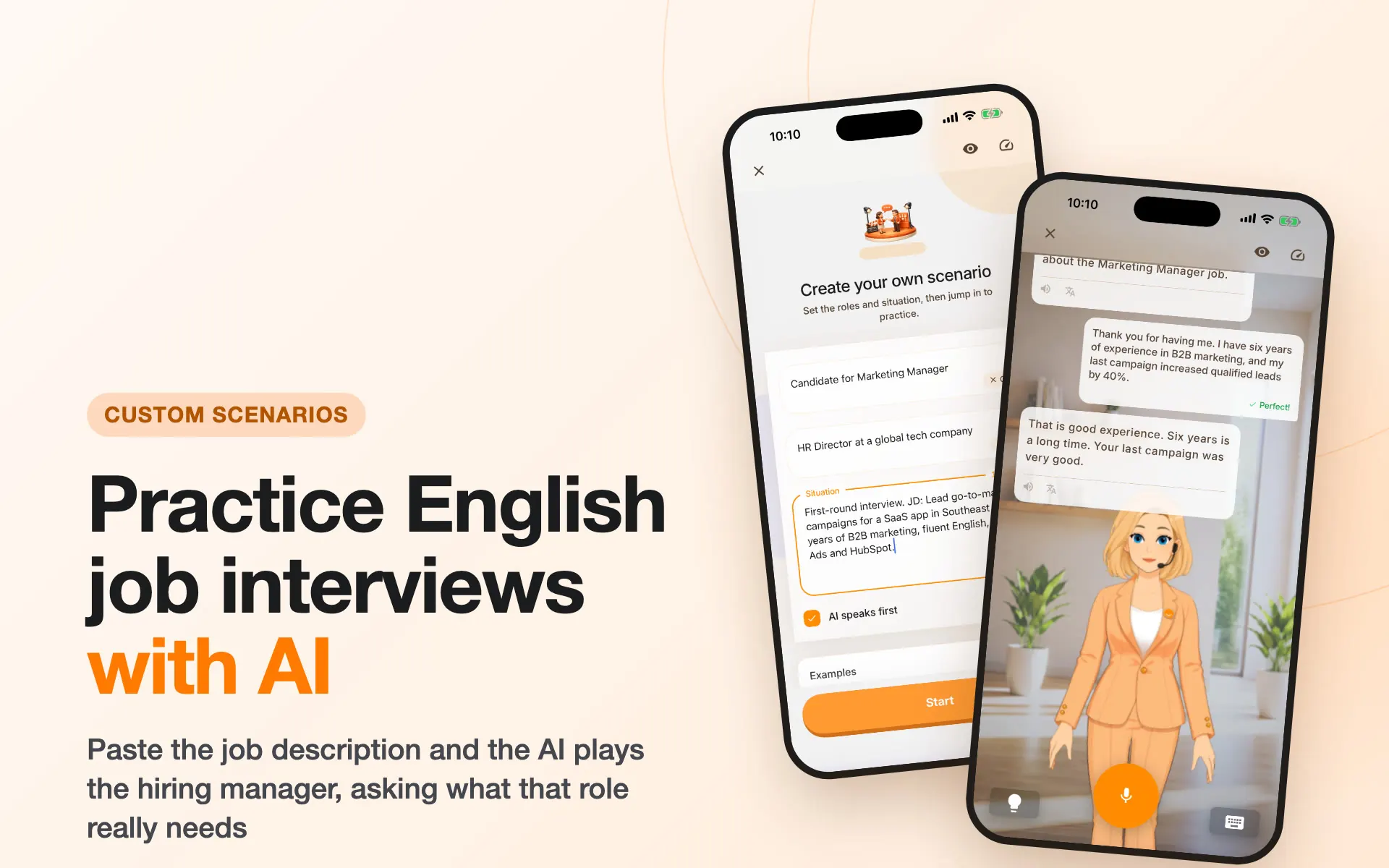
The fix is simple but has to start on day one: whenever you learn a word, learn two or three sentences that contain it, and say those sentences out loud. If you use Chamate, tapping a word mid-conversation gives you the meaning with examples, and the word goes into your vocabulary list to review later with games. A word you look up in the middle of a conversation sticks far better than one on a list, because it already has a context.
You're Translating in Your Head, and the Conversation Won't Wait
You want to say you're a bit tired today. Your brain starts: “a bit” or “a little”? Is it “tired” or “exhausted”? Does “today” go at the start or the end? Is the grammar right? Three seconds pass. The other person has moved on.
Fluent speakers don't translate. When they're tired, “I'm a bit tired today” comes out as one block, not word by word. Not talent. They've said that sentence, or ones shaped like it, hundreds of times.
Here's the part people rarely say out loud: to stop translating, you have to accept saying something simpler than what you're thinking in your own language. In your head it's “I'm feeling sluggish because I slept badly last night.” What actually comes out is “I'm tired. I didn't sleep well.” Those two short sentences beat three seconds of silence every time. I wrote more about speaking short and natural in how to speak English naturally like a native speaker.
Fear of Mistakes Switches Your Brain into Self-Censor Mode
For almost my whole first year at that company, I had Vietnamese colleagues speak for me. Not because I had nothing to say. Because every time I was about to open my mouth, three questions ran first: is this grammatically right, does my pronunciation sound weird, will they think I'm not good enough.
Those three questions eat exactly the part of your brain you need for speaking. It's like driving while staring at the rear-view mirror. You still know how to drive. You just can't move forward.
Fluent speakers aren't the ones who make fewer mistakes. They're the ones who keep talking after a mistake. Later, when I started speaking English with a friend who taught English, I got nearly every sentence wrong: wrong tense, stuck mid-sentence, no idea how to describe things. Someone once asked me about my most embarrassing mistake. I couldn't think of one, because in the beginning every attempt was wrong and awkward, so none of them stood out. The fear didn't vanish in one brave moment. It wore down because I was wrong so often that it stopped feeling like a big deal.
Ten Hours of Study, Ten Minutes of Speaking
Add up a typical week: five hours of English videos, three hours of vocabulary, two hours of grammar exercises. Time spent actually saying a full English sentence out loud? Usually a few minutes, if that.
That was my week in 2022. I watched a huge amount of film and YouTube and still couldn't follow my colleagues, because films have subtitles and actors speak clearly, and colleagues don't. I studied a huge amount of vocabulary and still couldn't speak, because studying words isn't speaking.
The skill you want is the skill you have to practice. If you want to swim, you get in the water. If you want to speak English, you speak English. There's no detour. Listening and reading still matter, but they're input. Without output, input just sits there.
What Actually Changed for Me
My turning point wasn't a book or a course. It was a few people.
I got close to some colleagues who used English a lot, then made a friend outside work who taught English. We talked constantly, went out, joined an English club. I spoke badly, but I spoke every day. About two months later my reflexes were noticeably faster. There was no “I can speak now” moment. One day I just realized I'd answered a colleague without thinking in Vietnamese first.
I also know I got lucky. There's a paradox every self-learner runs into: how do you find an English-speaking environment when you can't speak English yet? Friends are busy. You can't ask them to repeat a sentence ten times, or to watch every grammar mistake you make. One-on-one tutors are expensive. Strangers online are tiring, and not always safe.
That's why I eventually built Chamate: a place to speak English every day without waiting for anyone to be free, and without anyone judging you. In my view, AI isn't 100% as natural as a person yet, maybe 90%, but for building reflexes and as a stepping stone before you talk to real people, it's more than enough. AI doesn't replace friends. It gets you confident enough to go find them.
5 Things That Stopped Me Freezing When Speaking English
None of these are new. The difference is which one you do first, and whether you do it every day.
1. Learn sentences, not words
From today, every new word comes with at least one sentence you'd actually say. Not “nervous,” but “I'm a bit nervous about the meeting.” Say it out loud three times, not silently. Your ear hearing your own mouth is a different kind of memory from your eyes reading text.
2. Speak every day, even for 10 minutes
Consistency beats volume. Ten minutes a day beats two hours on Sunday, because reflexes need short gaps between repetitions. If you want a concrete routine, I wrote one in how to practice English speaking with AI in 15 minutes a day.
3. Listen to a model sentence, then say it back
Shadowing is what cleaned up my pronunciation fastest in 2022. Hear a sentence, pause, repeat it immediately, copying the intonation. It won't build conversation reflexes by itself, but it gets your mouth used to English, so that when you need to speak, your mouth isn't the bottleneck. There's a step-by-step version in how to practice speaking English alone at home.
4. Have real conversations, with a person or with AI
This is the most important one, and the one most learners put off the longest. The goal isn't to speak correctly. The goal is to keep speaking, so your brain gets used to pulling words out under time pressure.
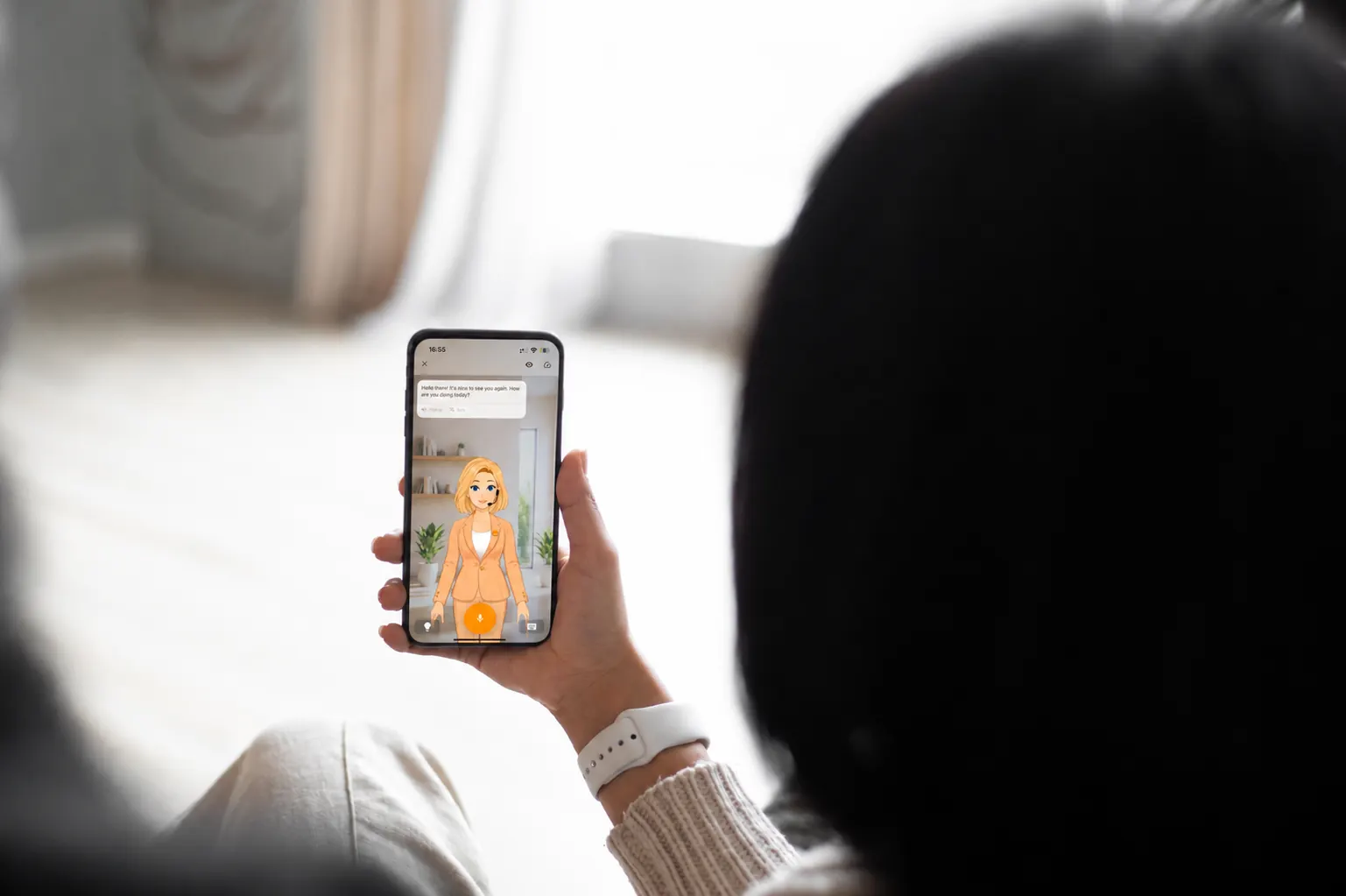
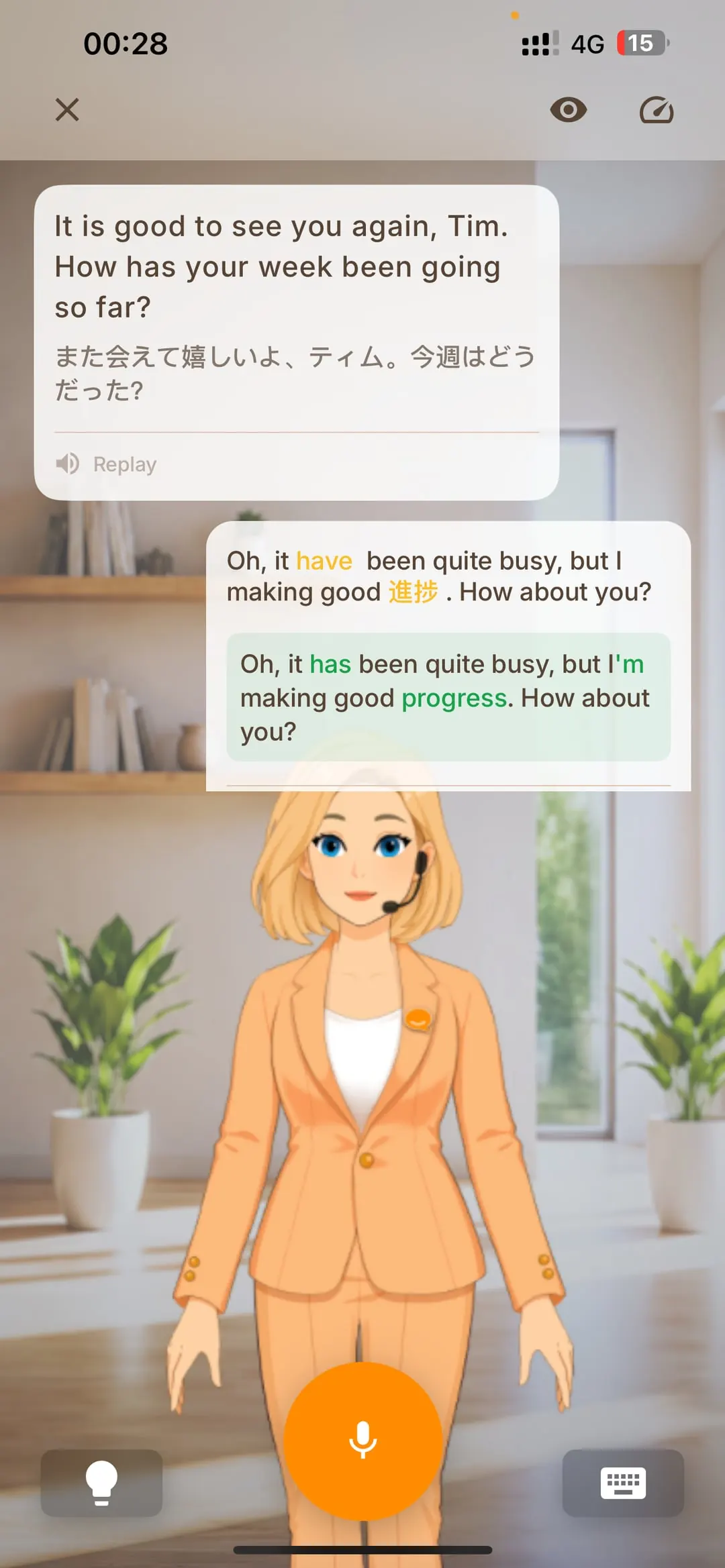
If you have nobody to talk to yet, start with AI. In Chamate you tap the mic to speak and tap again to send, so the AI never cuts in while you're hesitating over a word. If a word won't come, say it in your own language and Chamate rewrites the sentence in correct English so you can keep going. Grammar mistakes are corrected on the spot, and the sentences that need work are saved for later. I tried practicing with ChatGPT Voice first, and it talked too fast and jumped in while I was still thinking; I compare the two in detail in how to practice English speaking with ChatGPT.
5. Let yourself be wrong until being wrong stops feeling special
The fastest learners are usually the ones who make the most mistakes, because every mistake is a correction for the brain. You don't need one brave moment to beat the fear. You need to be wrong often enough that it becomes ordinary. For me that point came after about two months of speaking every day.
Final Thoughts
If you've studied a lot of vocabulary and grammar and still can't speak English, the problem isn't your ability. You've spent years training recognition and almost no time training production. The two don't convert on their own.
I honestly don't know when I became able to speak English. It felt like a line on a graph that kept going up, not steps labelled “not fluent,” “fluent,” “native.” Today I work in English more than in Vietnamese, with colleagues in Germany, India and the US, and I hold no certificate. The only thing I did differently was start talking, badly, every day.
If you have ten minutes tonight, say a short bit about your day out loud. To a friend, or to an AI. You can download Chamate and have a patient listener right now. The day you stop trying to speak perfectly is the day you start speaking.